
This week, we’re sharing an interview with Andrew Krinks, author of White Property, Black Trespass: Racial Capitalism and the Religious Function of Mass Criminalization from NYU Press, 2024. For the chat, we speak about taking a theological lens to the question of what ties exclusive private property, white masculinity, police impunity and mass incarceration in the US. We discuss aspects of Christian thought, employ concepts borrowed from the Black Radical tradition and try to get closer to the root of the sickness in our culture that flourishes from others pain.
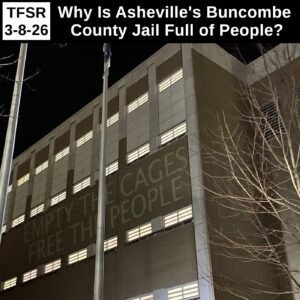
This week, we’re sharing an interview with Julie and Jeremy, two anarchists and participants in the Asheville Community Bail Fund. We speak about the US system of pre-trial incarceration aka bail and bond, the work of the bail fund locally, the overcrowding of the Buncombe County Jail here in Asheville, the ICE holds happening in the local jail, and how local policy choices regarding criminalization are being compounded by recent and new North Carolina legislation. Even if you aren’t in Asheville or North Carolina, it’s likely that much of this conversation will be pertinent to goings-ons in your neck of the woods (though hopefully not).
If you’re a regular listener to The Final Straw Radio, have a passion for enriching the anarchist media environment, feel like your values align with what you’ve heard on the show and want a chance to help out and hone your skills, we’re always looking for help. If you’ve thought of getting a podcast or other media project going but aren’t sure how to start, we can be a good jumping off point. Feel free to reach out via our emails
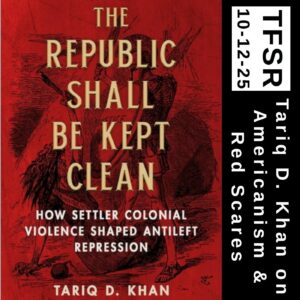
A conversation with Tariq D. Khan, author of The Republic Shall Be Kept Clean: How Settler Colonial Violence Shaped Antileft Repression, out from University of Illinois Press in 2023. In this conversation we talk about the connections between the anti-Indigenous motivations of the genocidal frontier wars in the US and the inward turn to heretical movements pushing for freedom for the laboring classes through the great upheavals of the period known as the Nadir, between the end of post-Civil War Reconstruction and the 1920’s. We talk about the roots of anti-Leftist violence of the various Red Scares and intersections with the institutions and psychology of white supremacy settler colonialism as well as the importance of resistance and education.